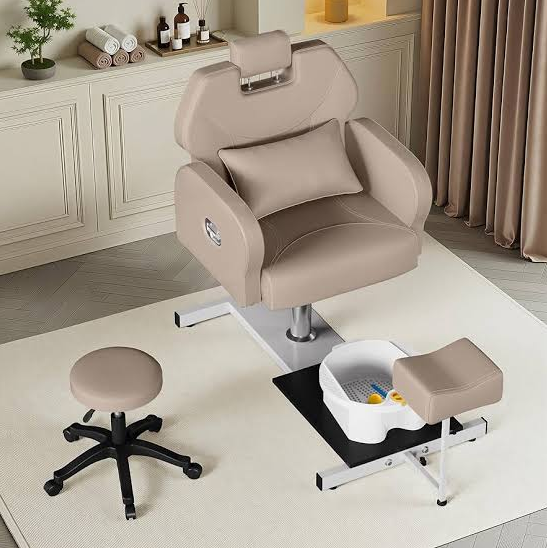
Water is at the heart of every pedicure. Clients soak their feet, therapists rinse and refresh, and the whole treatment depends on a clean, reliable supply. Behind the scenes, the chair has to manage that water safely: bringing it in, holding it while the client soaks, and getting rid of it cleanly afterwards. How a chair handles water shapes the daily routine of the salon more than most people realise, and understanding the options helps a salon owner choose wisely.
In older setups, pedicure chairs were often connected directly to the building’s plumbing, with fixed pipes bringing water in and carrying it away. This works well in a purpose-built salon, but it can be expensive and disruptive to install, especially in a rented space or a room that was not originally designed for wet treatments. Any change to the layout means calling in a plumber, and the chairs are tied to one position for as long as the pipes remain.
Modern chairs offer a different approach. Many are designed to work without a fixed connection, using a basin that is filled by hand or from a portable supply and then drained after each client. This flexibility is one of the reasons the design has become so popular: the chair can stand anywhere in the room, the layout can change without plumbing work, and a salon can add a pedicure station to a space that has no water connection at all.
The idea is simple, but the details matter. A basin that is easy to fill and empty saves the therapist time between clients, and a drain that works smoothly prevents spills on the floor. The basin itself should be shaped so the client can rest their feet comfortably, and it should be made from a material that is easy to clean and resistant to staining. When these details are right, the treatment feels seamless; when they are wrong, the therapist spends the day fighting the equipment.
Hygiene Comes First
Whatever water system a chair uses, hygiene is the top priority. The basin comes into direct contact with skin and water, so it must be cleaned thoroughly between every client. A smooth surface with few corners makes this much easier, and a basin that lifts out or drains fully leaves nowhere for old water to linger. The cleaning routine should be simple enough that the team follows it every single time, even on the busiest days.
Salons should also think about how the water is disposed of. Used water needs to go somewhere safe and hygienic, and the team should have a clear routine for emptying and rinsing the basin after each appointment. A chair that makes this process quick and tidy encourages good habits, while one that makes it awkward invites shortcuts. Over time, consistent cleaning protects both clients and the salon’s reputation.
Local rules and building requirements are another part of the picture. Different areas have their own expectations for how salon water is handled, and a salon owner should understand what applies in their own location. This might cover drainage, the handling of used water, or the general standard of hygiene in the treatment room. Checking the local requirements before installing new chairs is far easier than fixing a problem afterwards. The manufacturer’s guide to pipeless pedicure chair plumbing explains how these systems are designed to work and what to look for when choosing a chair, which helps an owner ask the right questions before committing.
For salons that want clear, practical guidance on this topic, the supplier can usually provide a guide that explains the system in plain language. Reading it before buying helps the owner compare models, plan the installation, and understand what the local expectations require. A little reading in advance often prevents costly mistakes later, and it gives the whole team confidence that the new chairs will fit the salon’s way of working.
Keeping the System in Good Order
Once the chairs are in use, a simple maintenance routine keeps everything working well. The basin should be inspected regularly for wear, the drain should be checked to make sure it runs freely, and any seals or fittings should be looked at from time to time. Small problems caught early are easy to fix, while problems left alone tend to grow into expensive repairs or interruptions to the working day.
Staff training is part of good maintenance too. Everyone who uses the chairs should know how to fill, drain, and clean them properly, and new team members should be shown the routine on their first day. A short written checklist kept near each station helps the team stay consistent, and it gives the owner confidence that standards are being kept even when they are not in the room.
See also: Passenger Rights When an Accident Causes Life-Altering Injuries
Frequently Asked Questions
1. What does pipeless mean for a pedicure chair?
It means the chair does not need a fixed connection to the building’s water pipes. The basin is filled and drained by hand, so the chair can be placed anywhere in the room and moved without plumbing work.
2. Is a pipeless system hygienic?
Yes, when it is cleaned properly between clients. The basin should be emptied, rinsed, and disinfected after every appointment, and the team should follow the same routine every time.
3. What should I check before choosing a pedicure chair water system?
Think about the room layout, whether a fixed water connection is available, and how the team will fill, drain, and clean the basin. Also check any local requirements that apply to salon water handling.
Conclusion
Water handling is one of the most practical parts of running a pedicure service, and the right chair makes it simple. A system that is easy to fill, drain, and clean keeps appointments flowing and clients comfortable, while a clear understanding of local requirements keeps the salon on solid ground. With good equipment and a consistent routine, the plumbing side of pedicures takes care of itself, leaving the team free to focus on the treatment.