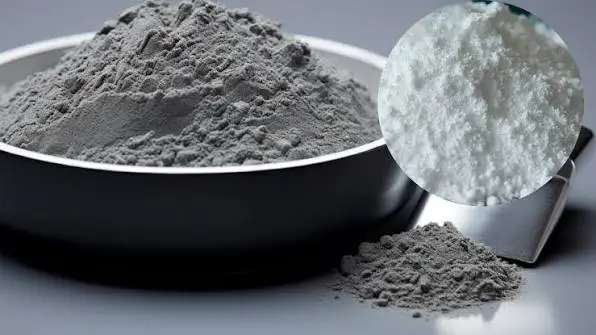
Fine inorganic powders are used in many industrial formulations, but their small particle dimensions can create special processing requirements. Titanium dioxide in a fine powder form can provide useful characteristics in coatings, plastics, inks, and other engineered materials.
To achieve consistent results, manufacturers need to understand particle behavior, dispersion, storage, handling, and quality control.
Read Also: Financial Planning for Business Growth
Understanding Powder Characteristics
Fine titanium dioxide powder can have a relatively high surface area compared with larger particles.
This can influence how the powder interacts with liquids, binders, polymers, and other components.
Particle size, surface treatment, crystal structure, and purity should all be considered when evaluating a product.
Why Particle Size Matters
Particle size can influence dispersion, surface interaction, and formulation behavior.
However, smaller particles are not automatically suitable for every application.
Very fine materials can be more difficult to disperse and may require carefully controlled processing.
The desired particle characteristics should therefore be determined by the final product requirements.
Avoiding Agglomeration
Agglomeration can reduce the effectiveness of a fine powder within a formulation.
Particles may form clusters during storage or processing.
Appropriate mixing equipment and processing conditions can help improve distribution.
In liquid systems, manufacturers may evaluate dispersants, solvent compatibility, shear level, and addition sequence.
Dispersion in Coatings
Coatings manufacturers often need uniform distribution of fine particles.
Poor dispersion can influence appearance, viscosity, stability, and final coating characteristics.
A controlled dispersion procedure should be established during product development and then transferred carefully to production.
Use in Plastics
Fine titanium dioxide can also be incorporated into polymer systems.
During compounding, temperature, mixing intensity, residence time, and polymer chemistry can influence particle distribution.
A suitable grade should be selected according to the processing conditions of the polymer system.
Printing and Ink Applications
Ink systems require careful control of particle dispersion and rheology.
Fine titanium dioxide may be evaluated where its optical or functional characteristics are relevant.
The ink developer should consider viscosity, settling, compatibility, drying, and printing equipment.
Storage Conditions
Proper storage helps preserve raw-material quality.
Fine powders should generally remain in suitable sealed packaging and be protected from contamination and excessive moisture.
Manufacturers should always follow the supplier’s specific storage instructions.
Safe Material Handling
Industrial handling procedures should be based on the supplier’s safety documentation and the conditions of the workplace.
Appropriate ventilation, dust-management controls, personal protective equipment, and material-transfer procedures may be required depending on the process.
Workers should receive suitable training before handling fine powders.
Quality Control
Manufacturers can establish incoming inspection procedures for important characteristics.
Depending on the application, these may include:
- Particle size
- Purity
- Surface area
- Moisture
- Appearance
- Dispersion behavior
Regular quality checks can help identify differences between batches.
Choosing a Suitable Product
Material selection should consider the complete formulation.
A grade suitable for one coating or polymer may not perform identically in another.
Manufacturers should therefore conduct application testing before commercial adoption.
Technical information related to nano titanium dioxide powder can be considered during the evaluation of fine titanium dioxide materials.
Scaling From Laboratory to Production
Laboratory mixing conditions rarely translate perfectly to industrial equipment.
Differences in vessel size, impeller design, shear rate, temperature control, and processing time can change dispersion behavior.
Pilot-scale trials can help identify these differences before full production.
Frequently Asked Questions
1. Why is dispersion important for fine titanium dioxide powder?
Uniform dispersion helps maintain consistent formulation behavior and reduces problems caused by particle agglomeration.
2. What affects powder performance?
Particle size, surface treatment, crystal structure, purity, formulation chemistry, and processing conditions can all influence performance.
3. How should fine powder be stored?
It should be stored according to the supplier’s recommendations, with suitable protection against contamination and moisture.
Conclusion
Fine titanium dioxide powder can be useful across coatings, plastics, inks, and other industrial formulations. Its successful use depends on understanding particle characteristics and controlling dispersion, handling, storage, and processing.
Application-specific testing and consistent quality control allow manufacturers to determine whether a particular grade meets the requirements of their production process.