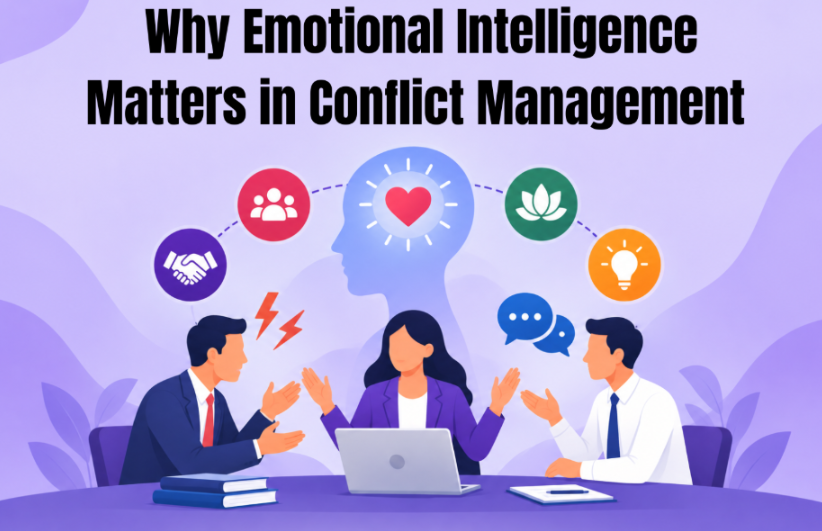
Why can the same disagreement end in a useful conversation for one team but become a serious conflict for another? The difference lies in how people recognise and manage emotions. CIPD Level 7 can help professionals develop advanced people management knowledge for handling complex workplace situations.
Effective Conflict Management requires more than policies and procedures. It also needs empathy and thoughtful communication. In this blog, we explore why Emotional Intelligence matters when resolving disagreements and building stronger workplace relationships.
Table of Contents
- Key Reasons Emotional Intelligence Strengthens Conflict Management
- Conclusion
Key Reasons Emotional Intelligence Strengthens Conflict Management
Below are the key reasons Emotional Intelligence helps professionals manage workplace disagreements and reach more constructive solutions:
Helps People Recognise Their Own Emotions
Conflict can rapidly lead to irritation or disappointment. People who are not aware of these feelings may respond without contemplating the effect of their comments.
Self-awareness helps people to notice what they are experiencing and how these feelings can affect their conduct. This gives you time to think about your answer. In Conflict Management, that knowledge can help avoid a simple argument from becoming something more serious. It also makes professionals feel more in control and clear when approaching challenging conversations.
Supports Calm Responses During Disagreements
It is useful to know how you feel, but it is equally important to manage that sensation. When people feel strongly, they could cut in, accuse others or say things they later regret.
Emotional management helps people react more calmly. Rather than springing into action, they can address the issue and determine what the end result should be. CIPD Level 7 can help professionals build people management skills, which allows them to deal with difficult working situations in a more considered way.
Builds Greater Empathy Between People
The identical circumstance may be experienced extremely differently amongst two employees. One person may find rationale in a manager’s decision while another may feel dismissed.
Having empathy in the workplace enables individuals to understand viewpoints that are different from their own. In no way does this imply that one must agree with every opinion. The term refers to the process of identifying the reasons for a person’s feelings or responses. This comprehension has the potential to lessen defensiveness and so establish a more favourable starting point for the resolution of disagreements.
Improves Communication During Difficult Conversations
Your delivery of a message can impact how the other person responds. Even if the message is correct, it might have an impact if it is delivered with blame.
They think about their tone and choice of words and their workplace communication is more effective. Emotional Intelligence enables professionals to bring up issues without making the conversation too personal. Clear and respectful communication focuses on the issue to be resolved and creates better professional connections.
Helps Managers Identify Hidden Causes of Conflict
The issue we see is not usually the real issue. An argument about a deadline may actually be about unclear obligations, pressure of workload or a feeling of not being heard.
Emotionally intelligent managers see beyond the immediate disagreement. They concentrate on behaviour, communications and personnel issues. Conflict Management improves if managers understand what is causing the stress. The root cause can be dealt with so as to avoid recurrence of the same conflict.
Reduces Defensive Reactions
If we feel accused or criticised, we can become defensive. That makes solving the original problem considerably more difficult.
Emotional Intelligence helps a manager to handle difficult issues more carefully. They might concentrate on specific behaviours and results rather than personal judgements. Good dispute resolution skills include encouraging questioning and open discussion.
Supports Fairer Conflict Resolution
Managers may sometimes feel more comfortable with one employee’s communication style than another’s. Personal feelings can impact judgements if not recognised.
Being self aware helps managers to detect these reactions and separate them from the realities of the conflict. CIPD Level 7 can help develop an understanding of strategic people practices and professional decision-making.
Conclusion
Emotional Intelligence turns conflict from an emotional reaction into an opportunity for clearer understanding. Emotional control helps people address disagreements without damaging valuable relationships. Effective Conflict Management becomes stronger when these abilities guide difficult conversations and workplace decisions.
Oakwood International supports professionals seeking advanced people management knowledge that can strengthen communication, workplace relationships and confidence when handling challenging situations.