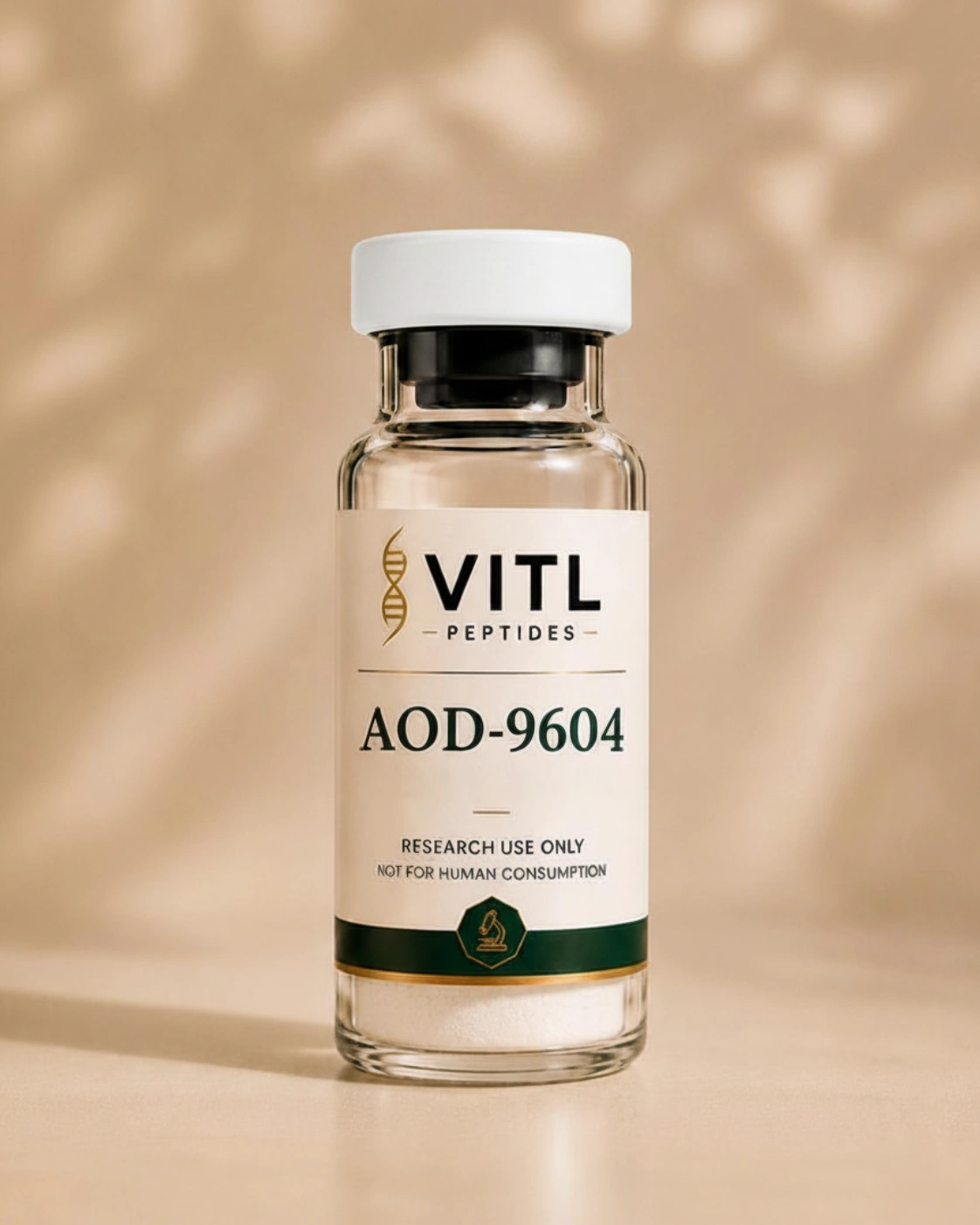
AOD-9604 research has attracted interest in scientific discussions about peptide structure, molecular design, and the biological pathways associated with growth hormone fragments. Understanding this compound requires looking beyond product descriptions to examine its molecular origins, proposed mechanisms, research limitations, and the importance of reliable analytical documentation. These factors help researchers approach the subject with scientific care rather than relying on broad promotional claims.
For those researching an AOD-9604 peptide for sale, understanding the compound’s characteristics is an important starting point. Product availability does not establish purity, biological activity, or suitability for a particular experiment. A structured approach to evaluating molecular information and quality documentation can help researchers distinguish established scientific background from questions that still require further investigation.
Understanding the Molecular Structure of AOD-9604
AOD-9604 is a synthetic peptide fragment derived from a region of human growth hormone. Its development was associated with investigating whether certain biological effects attributed to growth hormone could be studied separately from other functions of the larger molecule. Understanding its structural background provides useful context for interpreting scientific literature and evaluating claims about the compound.
What Is AOD-9604?
AOD-9604 is a modified peptide corresponding to a portion of the C-terminal region of human growth hormone, commonly described as residues 176–191 with an additional modification. Researchers have investigated this fragment in connection with biological processes involving fat metabolism. However, findings from early experimental work should not be treated as proof of a specific effect in humans.
Its identity as a peptide fragment also matters when reviewing scientific information. AOD-9604 is not interchangeable with full-length growth hormone, and conclusions about one molecule cannot automatically be applied to the other. Researchers should consult reliable scientific publications and examine the experimental context before drawing conclusions about its potential functions.
Why Peptide Structure Matters in Research
A peptide’s structure influences how it behaves under particular experimental conditions. Factors such as its amino acid sequence, chemical modifications, molecular characteristics, and stability can affect interactions with biological systems. For this reason, researchers need precise identification rather than relying on a compound name alone.
When reviewing information about an AOD-9604 peptide for sale, consider whether the product documentation clearly identifies the material and provides appropriate analytical evidence. Relevant details may include its stated molecular characteristics, batch identification, and available purity results. These records help researchers determine whether the supplied material is described consistently, although documentation must be evaluated carefully to establish what it actually verifies.
AOD-9604 Research and Its Proposed Biological Function
Scientific interest in AOD-9604 has focused on its relationship to processes associated with fat metabolism. Understanding this research requires distinguishing between a proposed mechanism, findings from laboratory experiments, results from animal studies, and evidence from human clinical investigations. Each type of evidence answers different questions and has different limitations.
Exploring Proposed Metabolic Pathways
AOD-9604 has been investigated for possible effects on processes involved in lipid metabolism, including pathways associated with fat breakdown and fat storage. Researchers have explored whether the fragment may influence certain metabolic responses without reproducing all the effects associated with full-length growth hormone. These questions remain distinct from establishing a reliable clinical outcome.
When interpreting a proposed mechanism, researchers should examine how an experiment was designed, what biological measurements were collected, and whether the findings were independently replicated. A change observed in a controlled laboratory model does not necessarily predict what would happen in a human body. Clear distinctions between hypotheses and demonstrated findings are essential for responsible scientific communication.
Understanding the Limits of Available Evidence
Research findings must be evaluated according to the quality and relevance of the evidence. Laboratory studies can help identify possible biological interactions, while animal studies may offer additional information about complex biological responses. Human studies are necessary to investigate questions involving clinical safety and effectiveness, but their results must also be assessed for study design, sample size, and limitations.
Readers researching AOD-9604 should therefore ask several questions:
- Was the research conducted in cells, animals, or humans?
- What outcome did the investigators actually measure?
- Were the findings replicated in other studies?
- What limitations did the researchers identify?
- Do the conclusions match the evidence presented?
These questions provide a practical framework for assessing claims without assuming that preliminary research establishes a proven application.
Evaluating an AOD-9604 Peptide for Sale
Scientific background is only one part of evaluating research materials. Product identity, analytical testing, batch traceability, and documentation also matter when researchers assess whether a material is appropriately characterized for laboratory investigation. Product listings should be considered a starting point for verification, not conclusive evidence of quality.
Reviewing Certificates of Analysis and Purity Data
A certificate of analysis (CoA) may provide information about a particular batch, including test results, reported purity, and analytical methods. Researchers should check whether the document identifies the relevant batch and whether the results support the claims made in the product description. A generic report that cannot be linked to the material being considered offers less specific evidence.
Analytical methods also require careful interpretation. High-performance liquid chromatography can help characterize a sample’s chromatographic profile, while mass spectrometry can provide evidence relevant to molecular identification. Neither result should automatically be interpreted as proof of every aspect of quality. When considering an AOD-9604 peptide for sale, review the actual report and ask the supplier to explain any unclear findings.
Checking Traceability and Handling Information
Traceability connects a product to its identifying records and relevant quality documentation. Batch numbers, consistent labeling, and accessible records can help researchers maintain accurate laboratory inventories and investigate discrepancies. Clear storage instructions are also important because handling requirements may vary according to a material’s formulation and characteristics.
Before evaluating a supplier, check whether it provides:
- Consistent product identifiers and batch references.
- Relevant analytical documentation for the material.
- Clear storage and handling instructions.
- A process for answering technical questions or investigating discrepancies.
These checks do not replace independent scientific assessment, but they help researchers determine whether the available information is sufficiently clear and consistent for their documentation needs.
Responsible Approaches to AOD-9604 Research
Responsible research depends on accurate records, cautious interpretation, and clear distinctions between scientific investigation and unverified claims. Researchers should consider the purpose of their work, the evidence supporting their hypotheses, and the limitations of the materials and methods being used. These principles help maintain consistency throughout the research process.
Separating Research Information From Promotional Claims
Product descriptions sometimes use broad language that suggests established results without providing enough supporting evidence. Researchers should look for specific statements that can be checked against scientific publications or analytical records. Claims about biological activity, safety, or effectiveness require appropriate evidence and should not be inferred from product availability or purity figures alone.
For example, a listing that reports a measured purity percentage does not establish that a compound produces a particular biological response. Likewise, a proposed mechanism described in a research paper does not guarantee a reproducible outcome in another experimental setting. Those considering whether to buy AOD-9604 peptide should prioritize documented material characteristics and credible scientific information rather than treating marketing language as proof.
Maintaining Consistent Research Documentation
Well-organized records make it easier to interpret results and identify possible sources of variation. Researchers can document material identifiers, batch numbers, available analytical reports, storage conditions, experimental methods, and relevant study limitations. Keeping these details together helps distinguish differences in experimental outcomes from differences in the materials or procedures used.
Vitl Peptides can be evaluated using the same documentation-focused approach applied to any research material. Researchers should review the product information and supporting records available, request clarification where necessary, and avoid assuming that unverified claims establish quality. Consistent documentation supports more transparent evaluation and helps make scientific conclusions easier to review.
Conclusion
AOD-9604 research offers a useful context for exploring peptide structure, molecular modifications, and proposed relationships with metabolic pathways. However, understanding the compound requires distinguishing its molecular identity from hypotheses about biological function and recognizing the limitations of the available evidence. Laboratory findings should not automatically be interpreted as proof of clinical safety or effectiveness.
When evaluating an AOD-9604 peptide for sale, researchers should review product specifications, batch-specific analytical documentation, traceability, and handling information. Scientific publications should also be assessed according to their methods, findings, and limitations. Vitl Peptides can be considered within this evidence-based framework by examining the product information and documentation it provides. Ultimately, responsible AOD-9604 research depends on careful interpretation, verifiable records, and a clear distinction between established findings and unanswered scientific questions.