High-volume glass manufacturing requires careful coordination between production speed and product quality. Increasing output without appropriate process control can lead to higher defect rates, material waste, and equipment pressure.
For manufacturers operating continuous production systems, quality management should be integrated into every stage of the workflow.
Establishing Quality Standards
The first step is defining clear product requirements. These may include dimensions, surface appearance, thickness, thermal treatment, and other characteristics relevant to the final application.
Documented standards provide operators and inspectors with a consistent reference.
They also make it easier to identify deviations during production.
Inspecting Incoming Material
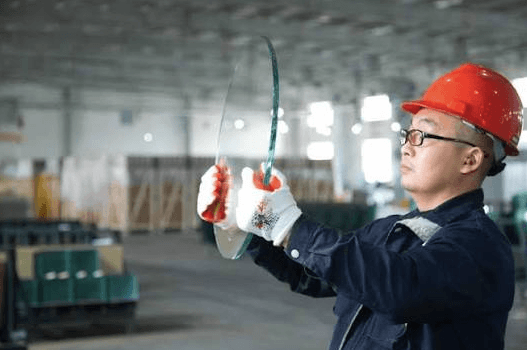
Quality begins before glass enters the processing system. Raw sheets should be checked for visible defects, contamination, dimensions, and other relevant requirements.
Proper storage can reduce the risk of handling damage.
By identifying problems early, manufacturers can avoid spending additional processing time on unsuitable material.
Maintaining Thermal Consistency
Heating conditions need to remain controlled during high-volume production. Changes in temperature or processing conditions can affect product consistency.
Operators should monitor relevant readings and document significant changes.
Continuous monitoring can help production teams respond before a small deviation becomes a larger quality issue.
Using Continuous Heating Technology
High-volume operations may benefit from equipment designed around steady material movement and controlled heating.
When researching equipment, manufacturers can examine the EASTTEC Forced Convection Continuous Heating Machine as part of their comparison.
The suitability of any system should be evaluated according to product specifications, production volume, factory layout, maintenance requirements, and process objectives.
Balancing Speed and Quality
Production speed should not be considered separately from quality. Increasing throughput can be counterproductive if it creates additional defects.
Manufacturers should establish operating ranges that support both productivity and product requirements.
Production teams can use defect data to determine whether changes in processing speed are affecting quality.
Monitoring Production Data
Data can provide useful information about manufacturing performance. Relevant measurements may include:
- Defect rates
- Output
- Material waste
- Downtime
- Processing time
- Energy use
- Maintenance events
Regular analysis can reveal trends that may not be obvious during day-to-day operations.
Preventing Equipment-Related Defects
Equipment condition can influence product quality. Worn mechanical components, inaccurate sensors, or unstable heating elements may contribute to inconsistent results.
Preventive maintenance should therefore be part of the quality management strategy.
Maintenance teams should document repairs and monitor recurring equipment problems.
Training Quality-Focused Employees
Employees should understand both production and quality requirements. Training can help operators recognize deviations and respond appropriately.
Quality procedures should be simple enough to follow consistently during busy production periods.
Regular communication between production and quality teams can also improve coordination.
See also: Car Lighting Tech That Makes Driving Safer
Reviewing Customer Feedback
Customer feedback can provide valuable information about finished products. If similar issues are reported repeatedly, manufacturers should investigate the relevant production stages.
Feedback can be incorporated into quality improvement programs and employee training.
Continuous Improvement
Quality management should be an ongoing process. Manufacturers can review production data, equipment performance, customer feedback, and maintenance records regularly.
Small process improvements can accumulate over time and contribute to more reliable high-volume manufacturing.
FAQs
1. How can high-volume manufacturers maintain quality?
They can establish clear standards, monitor thermal conditions, inspect materials, maintain equipment, train employees, and analyze production data.
2. Why should production speed and quality be evaluated together?
Increasing speed without process control can increase defects and waste, reducing the actual efficiency of the operation.
3. What data is useful for quality management?
Defect rates, output, downtime, material waste, processing time, energy consumption, and maintenance records can all provide useful insights.
Conclusion
Quality management is essential for high-volume glass manufacturing. Stable thermal conditions, suitable equipment, material inspection, preventive maintenance, employee training, and production data can help manufacturers balance output with consistent product requirements. Integrating quality control throughout the workflow creates a stronger foundation for dependable production.