Maxillofacial trauma and reconstructive procedures can involve complex anatomical structures, including the facial bones, jaw, orbital region, and surrounding tissues. Restoring stability in these areas requires careful surgical planning and fixation methods that correspond to the patient’s anatomy, injury pattern, and clinical requirements.
Modern fixation technologies are designed to help stabilize bone segments during healing and reconstruction. Their design can vary according to the anatomical region, surgical approach, and type of procedure being performed. For healthcare professionals and medical-device purchasers, understanding the basic principles behind a maxillofacial fixation system can provide useful context when evaluating available surgical technologies.
Understanding Maxillofacial Fixation
Maxillofacial fixation refers to techniques and medical devices used to stabilize bone segments following trauma, corrective procedures, or reconstructive surgery.
Depending on the clinical situation, fixation may involve plates, screws, meshes, or other specialized components. These devices are generally selected according to the anatomical location and the mechanical requirements of the procedure.
The objective is to maintain appropriate positioning and stability while the affected bone undergoes healing or reconstruction.
See also: Clothing Design for Modern Lifestyles
Why Anatomical Planning Matters
The facial skeleton has a complex three-dimensional structure. Bone thickness, contours, nerves, blood vessels, teeth, sinuses, and other anatomical features can influence surgical planning.
Because of this complexity, fixation components are not necessarily interchangeable between every anatomical location.
Surgeons may consider:
- Location of the fracture or defect
- Bone thickness and quality
- Anatomical contours
- Required stability
- Surgical access
- Nearby anatomical structures
- Soft-tissue considerations
Detailed imaging and clinical assessment can help inform these decisions.
Plates and Screws in Facial Reconstruction
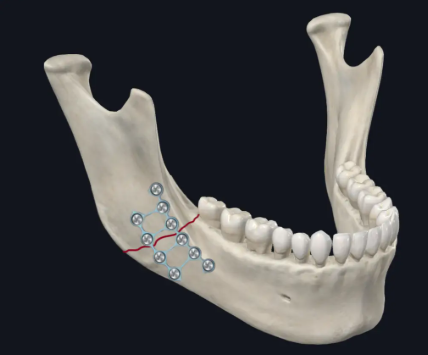
Plates and screws are commonly associated with internal fixation. Plates can provide structural support while screws secure the plate to the appropriate bone surfaces.
Different plate shapes and configurations may be designed for different regions of the facial skeleton.
The choice of plate and screw combination depends on factors such as the affected anatomy, fracture pattern, surgical technique, and the surgeon’s preferred approach.
The specific devices used should always be selected by qualified medical professionals according to the clinical circumstances.
Material Considerations
Medical fixation devices can be manufactured from materials selected for their mechanical and biological characteristics.
Titanium and titanium alloys are widely used in various orthopedic and craniofacial applications because of their combination of strength, corrosion resistance, and biocompatibility.
Material selection can also influence imaging considerations, mechanical behavior, and long-term clinical management.
Healthcare providers should review the technical documentation for individual products before making decisions about their use.
Design and Anatomical Compatibility
A fixation device should be appropriate for the anatomical area where it will be used. Anatomically shaped plates may reduce the amount of intraoperative contouring required, depending on their design.
The geometry of the plate can influence how it sits against the bone.
Important design considerations may include:
- Plate thickness
- Hole configuration
- Screw compatibility
- Shape and contour
- Mechanical strength
- Surgical access
A device’s technical specifications should be reviewed carefully before clinical use.
The Role of Imaging
Imaging is an important component of maxillofacial surgical planning. CT scans and other imaging techniques can provide detailed information about bone structures and the extent of injury or reconstruction requirements.
Three-dimensional imaging may help clinicians understand complex anatomical relationships before surgery.
In some cases, digital planning and patient-specific approaches may also be incorporated into treatment workflows.
Surgical Planning and Fixation
Successful fixation involves more than selecting an implant. The overall surgical plan can include fracture reduction, restoration of anatomical relationships, fixation placement, and assessment of stability.
The surgeon may determine the appropriate fixation strategy based on the specific clinical situation.
Factors such as access, visibility, bone quality, soft-tissue condition, and the location of critical structures can all influence the procedure.
Stability During Healing
One purpose of fixation is to maintain appropriate stability while healing takes place. The required degree of stability depends on the type and location of the procedure.
Different facial bones experience different mechanical forces. For example, areas involved in chewing may experience different loading conditions from regions with less functional stress.
Therefore, fixation design and placement need to correspond to the mechanical environment.
Importance of Screw Selection
Screws are an important component of many fixation systems. Their diameter, length, head design, threading, and compatibility with the selected plate can vary.
Incorrect component matching can create technical problems during surgery.
For this reason, medical teams should verify compatibility using official product documentation and established surgical protocols.
Patient-Specific Considerations
Every maxillofacial procedure is different. A fixation strategy suitable for one patient may not be appropriate for another.
Patient-specific considerations can include:
- Age
- Bone condition
- Injury pattern
- Previous surgery
- Anatomical variation
- Associated injuries
- Surgical objectives
These factors reinforce the importance of individualized clinical assessment by qualified professionals.
Postoperative Considerations
After a procedure, postoperative management depends on the surgery performed and the patient’s individual circumstances.
Clinicians may monitor healing, wound condition, stability, infection-related concerns, functional recovery, and other relevant clinical factors.
Patients should follow the instructions provided by their surgical team and report unexpected symptoms or concerns to an appropriate healthcare professional.
Selecting Medical Fixation Products
Hospitals and medical professionals evaluating fixation products may consider several technical and operational factors.
These can include:
- Product specifications
- Material information
- Available sizes
- Anatomical applications
- Screw compatibility
- Manufacturing standards
- Sterilization requirements
- Packaging
- Traceability
- Technical support
Regulatory and quality documentation should also be reviewed according to the requirements of the relevant healthcare market.
FAQs
1. What is the purpose of maxillofacial fixation?
Fixation devices are generally used to stabilize bone segments during procedures involving facial trauma, reconstruction, or other surgical treatment. The exact purpose depends on the clinical situation.
2. Are all fixation plates suitable for every facial bone?
No. Plate designs and dimensions can vary according to anatomical location and surgical requirements. Qualified surgeons select appropriate components based on the individual procedure.
3. What factors are considered when selecting fixation devices?
Factors can include anatomy, fracture or reconstruction pattern, bone quality, mechanical requirements, implant material, surgical approach, and compatibility between plates and screws.
Conclusion
Maxillofacial fixation is an important part of many facial trauma and reconstructive procedures. Because the facial skeleton has complex anatomy and different regions experience different mechanical demands, fixation components must be selected and used according to the specific clinical situation.
Understanding plate and screw design, material characteristics, anatomical compatibility, imaging, surgical planning, and postoperative management can help medical professionals evaluate fixation technologies more effectively. Individual treatment decisions should always be made by qualified clinicians using appropriate patient assessment, imaging, and manufacturer documentation.