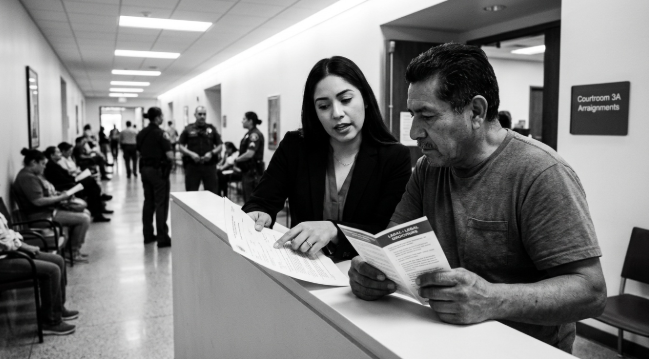
An arrest is the starting point of a criminal case, but it does not establish guilt. Early court proceedings identify the charges, protect constitutional rights, and determine whether the accused remains in custody. The arraignment usually comes first, followed by decisions about bail, legal representation, pleas, evidence, and future hearings. Knowing what happens at each stage helps defendants and their families meet deadlines, follow court orders, and make informed decisions as the case progresses.
Public attention and news coverage about violent crime can create intense pressure, but an arrest is not a conviction. When a case moves to an arraignment, individuals need to understand the legal process. For Californians, working with a Los Angeles law firm can be useful, as attorneys can explain the procedure that applies to specific cases. Court decisions still depend on the charges, evidence, and applicable courtroom rules. Let’s study each stage one by one.
- The Arraignment
At an arraignment, the judge identifies the defendant and states the filed charges. The defendant receives notice of the right to remain silent, the right to counsel, and the right to a trial.
The judge also asks for a plea. A not-guilty plea preserves the defendant’s right to contest the charges. A guilty or no-contest plea can lead to sentencing, so defendants usually review the consequences with counsel before entering either plea.
The court then addresses release conditions. Depending on the charge and other circumstances, the judge can order release, set bail, impose conditions, or keep the defendant in custody. Conditions can include travel restrictions, no-contact orders, drug testing, or attendance at future hearings.
- Appointment of Counsel and Case Information
A defendant who cannot afford a lawyer can ask the court to appoint counsel. Legal representation protects the defendant’s rights, helps assess the charges, and addresses custody or release issues.
The defense also needs basic case information, including the complaint, police reports, witness statements, recordings, and other evidence the prosecution must disclose. Discovery often continues after arraignment, but early access helps counsel identify factual disputes and possible defenses.
Defendants should avoid discussing case facts with police, witnesses, codefendants, or people who could later testify. Statements made outside protected attorney communications can become evidence for the prosecution.
See also: Clothing Design for Modern Lifestyles
- Probable Cause Review
The prosecution must support a criminal case with probable cause. In a misdemeanor case, the court often moves toward trial preparation after arraignment. A felony case generally requires an additional hearing or related process before trial.
In California, a preliminary hearing allows a judge to decide whether enough evidence supports moving felony charges forward. The prosecution does not need to prove guilt beyond a reasonable doubt at this stage. It must present evidence showing a reasonable basis for the charged offense.
The judge can hold the defendant to answer, reduce certain charges, or dismiss charges that lack sufficient support. The hearing also gives the defense an early chance to question testimony and identify weaknesses in the prosecution’s case.
- Pretrial Conferences and Motions
After the early hearings, the court schedules conferences to address discovery, plea discussions, motions, and trial readiness. Defense counsel can challenge evidence obtained through an unlawful search, seek records, or ask the court to exclude inadmissible statements.
A prosecutor can amend charges, dismiss counts, or present a plea agreement. The defendant decides whether to accept an agreement after reviewing the sentence, facts, rights waived, and possible immigration or professional consequences.
Some cases resolve during this period. Others continue because the parties need more evidence, the court must decide a motion, or the defense chooses to proceed to trial.
- What Defendants Should Do Before the Next Hearing
A defendant should confirm the next court date before leaving the courthouse. Missing a hearing can lead to a bench warrant, additional custody, or stricter release conditions.
The defendant should follow every release condition, preserve relevant messages and records, and provide counsel with accurate contact information. Witness names, photographs, medical records, and location data can help when they relate directly to the allegations.
Family members should avoid contacting an alleged victim or discussing the case publicly. They should also avoid posting case details online because prosecutors can use public statements in later proceedings.
Conclusion
An arraignment is the first formal checkpoint in a criminal case, not its conclusion. The defendant enters a plea, receives notice of rights, and addresses counsel and release. Later hearings test probable cause, manage evidence, and narrow the issues for resolution or trial. Anyone facing charges should record every court date, follow release terms, avoid public discussions about the facts, and consult qualified defense counsel before making statements or accepting a plea.